


彭逸凡
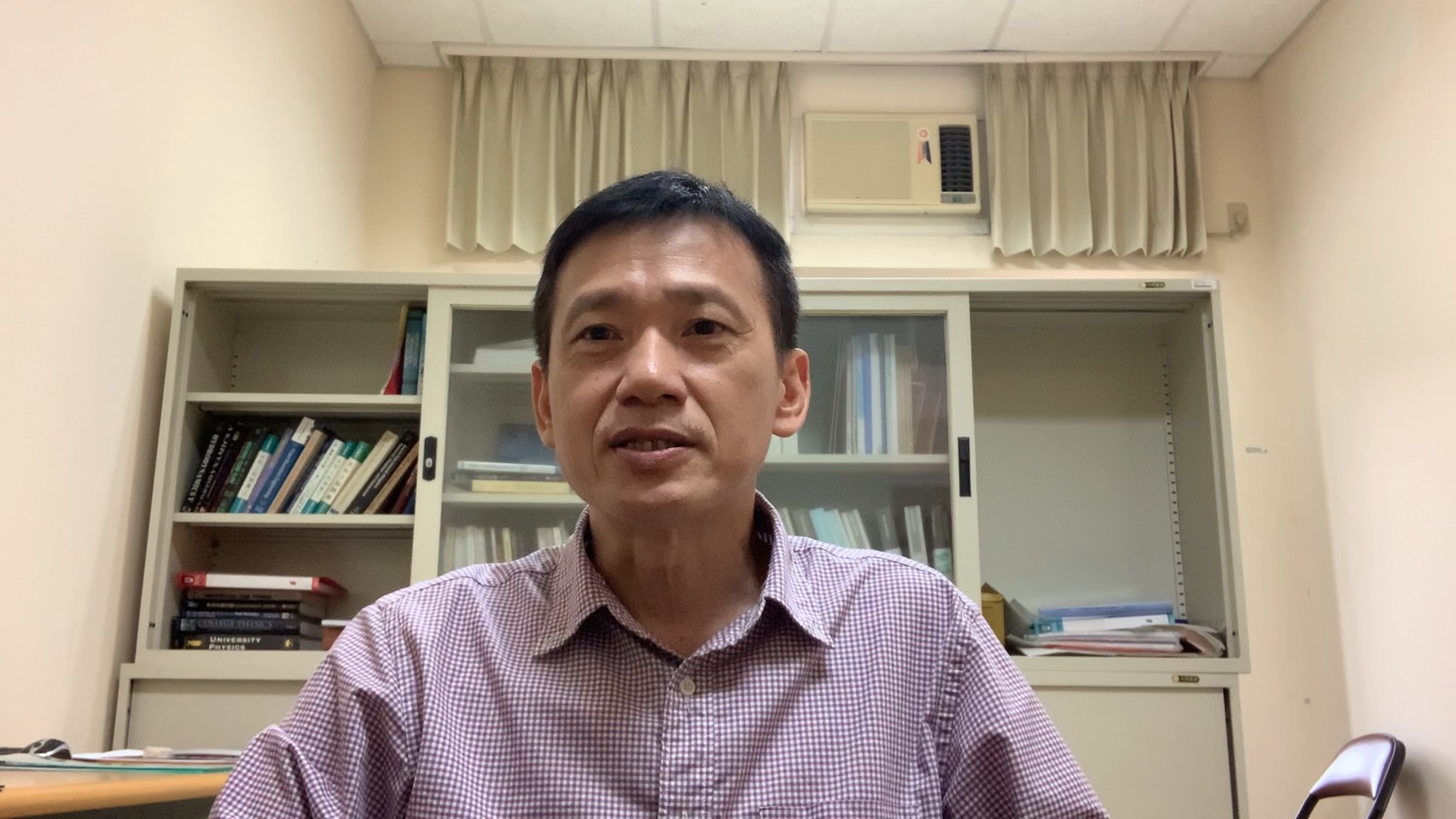
彭逸凡 PENG, Yih-Ferng
土木工程學系教授
| 校內分機 | 4960 |
|---|---|
| 電子信箱 | yfpeng@ncnu.edu.tw |
| 領域專長 | Computational Fluid Dynamics、Ocean Engineering、Bio-Fluid Mechanics |
學經歷
學歷
- 國立臺灣大學學士,民國 71–75 年
- 國立臺灣大學碩士,民國 75–77 年
- 國立臺灣大學博士,民國 77–82 年
經歷
- 國立暨南國際大學土木工程學系副教授,民國 93 年 8 月起
- Visiting Fellow, The George Washington University, Department of Mechanical & Aerospace Engineering,民國 95 年 2–5 月
- 國立暨南國際大學土木工程學系助理教授,民國 89 年 8 月至 93 年 7 月
- 中央研究院物理研究所博士後研究,民國 85 年 6 月至 89 年 7 月
教學課程
- 工程圖學、水利工程
- 土木工程設計實作、行動應用程式開發
- 水文學、水利計算模式
- 計算流體力學、明渠水力學
研究與興趣
- Computational Fluid Dynamics
- Ocean Engineering
- Bio-Fluid Mechanics
國內外期刊
國外期刊
- A. Sau, Y. F. Peng, and R. R. Hwang, 2016, “Spanwise bifurcations beneath the bluff-body instability modes,” Physics of Fluids, 28(6), 063601, pp. 1–20.
- Y. F. Peng and A. Sau, 2015, “Transitional hysteresis loop and coexistence of synchronized shedding in coupled wakes,” Physics of Fluids, 27(7), 074104, pp. 1–23.
- Y. F. Peng, 2013, “On the sub-critical bifurcation of anti-phase and in-phase synchronized vortex shedding forms,” Journal of Modern Physics, 4(5), pp. 89–95.
- I. C. Liu, H. H. Wang, and Y. F. Peng, 2013, “Flow and heat transfer for three-dimensional flow over an exponentially stretching surface,” Chemical Engineering Communications, 200(2), pp. 253–268.
- Y. F. Peng, A. Sau, W. C. Yang, and C. M. Hsieh, 2012, “Criticality of flow transition behind two side-by-side elliptic cylinders,” Physics of Fluids, 24(3), 034102, pp. 1–36.
- Y. F. Peng, R. Mittal, A. Sau, and R. R. Hwang, 2010, “Nested Cartesian grid method in incompressible viscous fluid flow,” Journal of Computational Physics, 229(19), pp. 7072–7101.
- C. N. Liu, J. J. Dong, Y. F. Peng, and H. F. Huang, 2009, “Effects of strong ground motion on the susceptibility of gully type debris flows,” Engineering Geology, 104(3), pp. 241–253.
- Y. F. Peng, 2008, “Study on a nested Cartesian grid method,” International Journal of Civil, Environmental, Structural, Construction and Architectural Engineering, 2(10), pp. 241–248.
- Y. H. Shiau and Y. F. Peng, 2006, “Nonlinear electro-optic characteristic in a photoexcited semiconductor,” Solid State Communications, 139(3), pp. 114–119.
- Y. H. Shiau and Y. F. Peng, 2005, “Long-lived transient behavior in an n(+)-n-n(+) semiconductor device with optical stochasticity,” Physical Review E, 71(6), 066216.
- Y. F. Peng, 2004, “On the bi-stabilities of vortex shedding flows behind a pair of square solids,” Journal of the Chinese Institute of Engineers, 27(3), pp. 385–393.
- Y. H. Shiau, Y. F. Peng, and C. K. Hu, 2003, “Multistability and chaos in a semiconductor microwave device with time-delay feedback,” Journal of the Physical Society of Japan, 72(4), pp. 801–804.
- Y. F. Peng, Y. H. Shiau, and R. R. Hwang, 2003, “Transition in a 2-D lid-driven cavity flow,” Computers & Fluids, 32(3), pp. 337–352.
- Y. F. Peng and Robert R. Hwang, 1999, “On the three-dimensional study of flows over a fence in a duct,” International Journal of Computational Fluid Dynamics, 12(2), pp. 119–132.
- Y. H. Shiau, Y. F. Peng, Robert R. Hwang, and C. K. Hu, 1999, “Multistability and symmetry breaking in the two-dimensional flow around a square cylinder,” Physical Review E, 60(5), pp. 6188–6191.
- Y. F. Peng and Robert R. Hwang, 1999, “A numerical study on turbulent vortex-shedding flows around a cubical form,” Journal of the Chinese Institute of Engineers, 22(5), pp. 639–648.
- R. R. Hwang, Y. C. Chow, and Y. F. Peng, 1999, “Numerical study of turbulent flow over two-dimensional surface mounted ribs in a channel,” International Journal for Numerical Methods in Fluids, 31(4), pp. 767–785.
- Y. F. Peng and R. R. Hwang, 1998, “Effect of the aspect ratio on the flow over a fence in a duct,” Transactions of the Aeronautical and Astronautical Society of the Republic of China, 30(4), pp. 253–260.
- R. R. Hwang and Y. F. Peng, 1995, “Computation of backward-facing step flows by a second-order Reynolds stress closure model,” International Journal for Numerical Methods in Fluids, 21(3), pp. 223–235.
- R. R. Hwang and Y. F. Peng, 1994, “Development of a Reynolds stress model with a cross diffusion of k in the ε equation,” International Journal of Computational Fluid Dynamics, 2(2), pp. 161–172.
- R. R. Hwang and Y. F. Peng, 1994, “Effects of near-wall approach methods on the predictions of complex flows with flow separation and secondary reversed flow,” Journal of the Chinese Institute of Engineers, 17(3), pp. 421–428.
- R. R. Hwang, T. R. Wang, and Y. F. Peng, 1990, “Development of an Anisotropic Turbulence Model for Prediction of Turbulence Flows,” Proceedings of the National Science Council, R.O.C., Part A, 14(5), pp. 380–388.
- R. R. Hwang, Y. F. Peng, and W. C. Yang, 1990, “Multiple-Port Buoyant Jets in Density Stratified Cross Flow,” Journal of the Chinese Institute of Engineers, 13(5), pp. 543–553.
國內期刊
- 彭逸凡,1988,《多孔排放射流浮昇效應之研究》,國立臺灣大學造船工程學系碩士論文。
- 彭逸凡,1993,《非等向性雷諾應力紊流模式之發展及應用》,國立臺灣大學造船及海洋工程學系博士論文。
國內外研討會
國外研討會
- Y. F. Peng, 2013, “On the sub-critical bifurcation of anti-phase and in-phase synchronized vortex shedding forms,” 2013 Spring World Congress on Engineering and Technology, Wuhan, China.
- Y. F. Peng and C. M. Hsieh, 2007, “Study on structured multi-block Cartesian grid method,” 17th International Offshore and Polar Engineering Conference, Lisbon, Portugal, pp. 2061–2068.
- C. M. Hsieh, R. R. Hwang, Y. F. Peng, W. C. Yang, and M. J. Chern, 2007, “Numerical simulation of solitary wave running and breaking on a sloping bed,” 17th International Offshore and Polar Engineering Conference, Lisbon, Portugal, pp. 2321–2326.
- W. C. Yang, R. R. Hwang, C. M. Hsieh, and Y. F. Peng, 2005, “Interaction of Nonlinear Progressive Waves with Two Serial Arranged Submerged Obstacles,” XXXI IAHR Congress, Seoul, Korea.
- Y. F. Peng and R. R. Hwang, 2000, “Transition in a lid-driven cavity flow,” ICTAM 2000, Chicago, USA.
國內研討會
- 佘霽剛、王文彥、彭逸凡,2014,流過一對並列橢圓柱同相位/異相位渦漩逸出流況之遲滯迴圈過程研究,第二十一屆全國計算流體力學學術研討會,南投。
- 潘宜婷、王文彥、彭逸凡,2014,一渠道內以低雷諾數流場流過突起物之數值研究,第二十一屆全國計算流體力學學術研討會,南投。
- 謝志敏、黃榮鑑、陳明志、彭逸凡,以 SPH 法模擬自由液面流場,第十四屆全國計算流體力學會議研討會,南投。
- 謝志敏、楊文昌、彭逸凡、黃榮鑑,斜坡上孤立波的傳播與破碎,第二十八屆海洋工程研討會,高雄。
- 許泰文、彭逸凡、謝志敏、楊文昌、黃榮鑑,2002,應用數值模擬波浪通過不透水雙列潛堤之渦流特性,第二十六屆全國力學會議,雲林。
- Y. F. Peng and I. C. Liu, 2002, “On the vortex shedding flows behind two side-by-side square cylinders,” 第二十六屆全國力學會議,雲林。
- Y. F. Peng and R. R. Hwang, 2001, “On the vortex shedding flows behind a pair of square cylinders,” 第二十五屆全國力學會議,台中。
- Y. F. Peng and R. R. Hwang, 2001, “Transition in a lid-driven cavity flow,” 第三屆海峽兩岸計算流體力學研討會,台南。
- 彭逸凡、黃榮鑑,2000,二維穴流中層流至渾沌流動的轉換過程,第二十四屆全國力學會議,中壢。
- Y. F. Peng and R. R. Hwang, 1999, “Transition from laminar to chaotic flow in lid-driven cavity,” 第六屆全國計算流體力學研討會,台東。
執行計畫
科技部/國科會計畫
- 彭逸凡,2015,流過隆丘流場之數值計算研究,科技部一般型研究計畫。
- 彭逸凡,2013,流過並排橢圓之流場轉變過程研究(II),國科會一般型研究計畫。
- 彭逸凡,2012,流過並排橢圓之流場轉變過程研究,國科會一般型研究計畫。
- 彭逸凡,2011,巢狀卡式網格法於含複雜邊界流場之應用,國科會一般型研究計畫。
- 彭逸凡,2010,巢狀卡式網格法於含自由液面及複雜邊界三維流場之發展及應用(II),國科會一般型研究計畫。
- 彭逸凡,2009,巢狀卡式網格法於含自由液面及複雜邊界三維流場之發展及應用,國科會一般型研究計畫。
- 彭逸凡,2008,地震下水庫水動力反應與潰壩之實驗及數值分析研究,國科會一般型研究計畫。
- 彭逸凡,2007,以卡氏網格模擬含複雜及移動邊界流場之數值研究,國科會一般型研究計畫。
- 彭逸凡,2006,移動邊界結構物與流體交互作用之數值研究,國科會補助科學與技術人員國外短期研究。
- 彭逸凡,2006,旋轉同心圓柱間流場轉變過程之研究(I),國科會一般型研究計畫。
- 彭逸凡,2005,流過交錯分佈方柱流場轉變過程之研究,國科會一般型研究計畫。
其他委案
- 彭逸凡、王貞儒,2011,100 年土石流自主防災社區推動與輔導,行政院農業委員會水土保持局。
- 王貞儒、彭逸凡,2010,99 年土石流自主防災社區推動與輔導,行政院農業委員會水土保持局。
- 彭逸凡、劉家男,2009,98 年土石流自主防災社區推動與輔導,行政院農業委員會水土保持局。
- 彭逸凡、劉家男,2008,97 年土石流自主防災社區推動與輔導,行政院農業委員會水土保持局。
- 劉家男、彭逸凡,2007,96 年土石流自主防災社區推動與輔導,行政院農業委員會水土保持局。
- 劉家男、彭逸凡,2006,土石流自主防災社區推動及考評機制研擬,行政院農業委員會水土保持局。